The Rarotongan Language: A Deep Dive into Te Reo Māori Kūki 'Āirani
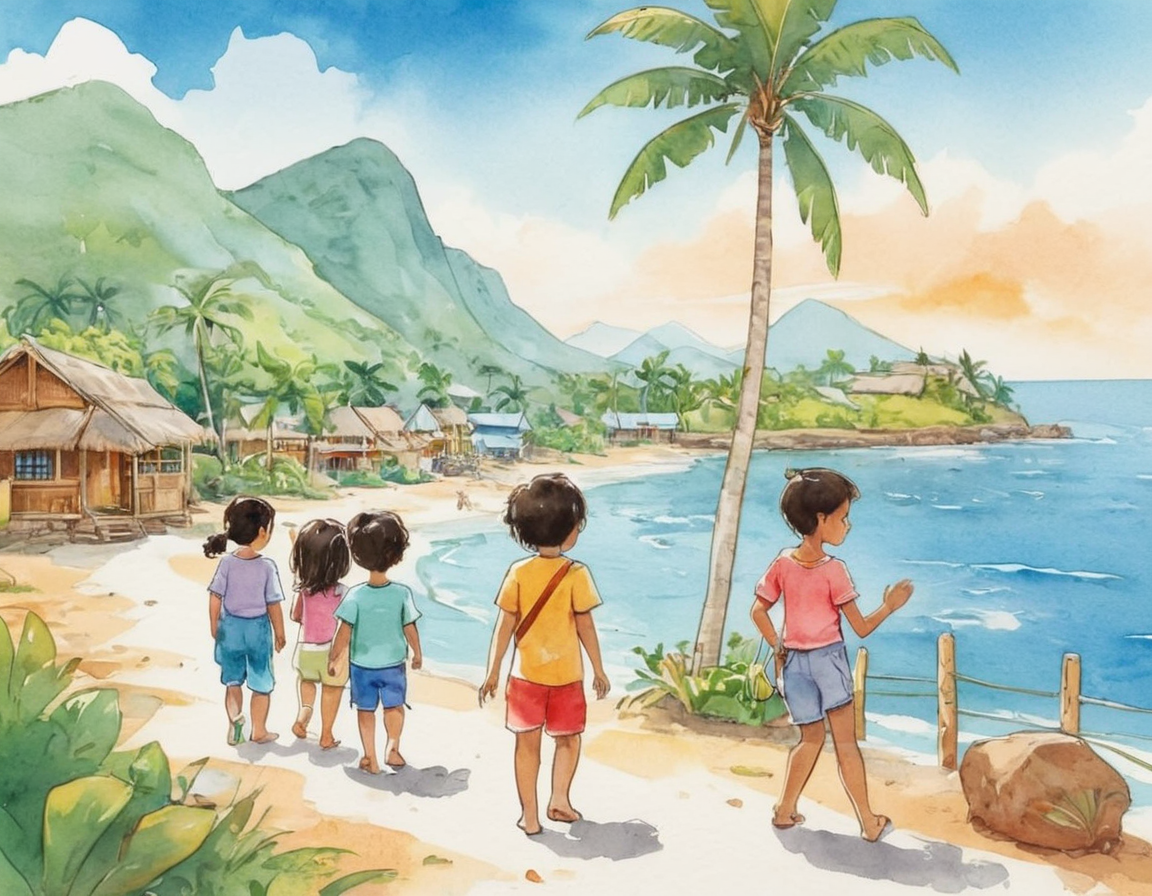
The Rarotongan Language: A Deep Dive into Te Reo Māori Kūki 'Āirani
Welcome to the ultimate guide to the Rarotongan language, also known as Te Reo Māori Kūki 'Āirani. This comprehensive article will serve as your primary resource for understanding this beautiful and vital Polynesian language. We will explore its rich history, cultural significance, fundamental linguistic structure, and its unique position within the broader family of Polynesian languages and the vibrant culture of the Cook Islands. Whether you're a language enthusiast, a cultural researcher, or planning a visit to Rarotonga, this deep dive will provide invaluable insights into the heart of the Cook Islands.
What is the Rarotongan Language?
The Rarotongan language is the indigenous language of the Cook Islands, an archipelago nation in the South Pacific. It is a Polynesian language, closely related to other East Polynesian languages such as Māori (of New Zealand) and Tahitian. While often referred to simply as "Rarotongan," its official and culturally appropriate name is Te Reo Māori Kūki 'Āirani, which translates to "the Māori language of the Cook Islands." This name emphasizes its connection to the broader Māori linguistic family while asserting its distinct identity.
Historical Roots and Evolution of Te Reo Māori Kūki 'Āirani
The history of the Rarotongan language is deeply intertwined with the Polynesian migrations that populated the Pacific. Around 800 AD, voyagers from what is now French Polynesia settled the Cook Islands, bringing with them their proto-Polynesian language. Over centuries, this language evolved in isolation, giving rise to the distinct dialects and the unified Rarotongan language we know today. European contact, particularly with missionaries in the 19th century, led to the development of a written form using the Latin alphabet, which was crucial for its preservation and dissemination. The Bible was one of the first major texts translated into Rarotongan, playing a significant role in standardizing its written form.
The Cultural Significance of the Rarotongan Language
For the people of the Cook Islands, the Rarotongan language is far more than just a means of communication; it is the very essence of their cultural identity. It carries generations of oral traditions, myths, legends, songs (imene tuki), and historical narratives. Speaking Te Reo Māori Kūki 'Āirani connects individuals to their ancestors, their land (whenua), and their unique heritage. It is a living repository of knowledge about their environment, social structures, and spiritual beliefs. Efforts to revitalize and promote the language are central to preserving the Cook Islands' distinct cultural fabric in the face of globalization.
Basic Structure and Grammar of Rarotongan
Understanding the fundamental structure of the Rarotongan language is key to appreciating its elegance and simplicity. Like many Polynesian languages, it has a relatively straightforward grammatical system compared to some European languages, but it possesses its own unique nuances.
Phonology: Sounds of Rarotongan
The Rarotongan alphabet consists of 18 letters: A, E, I, O, U, F, G, K, L, M, N, NG, P, R, T, V, ' (glottal stop). The vowels are pronounced similarly to their Spanish or Italian counterparts. The glottal stop ('), often represented by an apostrophe, is a crucial consonant that can change the meaning of words, similar to the space between "uh-oh." Consonants are generally pronounced as in English, with a few exceptions like 'ng' which is a single sound as in "sing." The rhythm and intonation of Rarotongan are melodic and flowing, reflecting the musicality of the culture.
For a detailed breakdown of Polynesian phonology, you can refer to resources like Wikipedia's entry on Polynesian languages.
Simple Sentence Structure
Rarotongan typically follows a Verb-Subject-Object (VSO) word order, which differs from the Subject-Verb-Object (SVO) order common in English. For example, instead of "The man eats fish," it would be structured more like "Eats the man fish." This fundamental difference is one of the first things learners encounter. Articles and particles play a significant role in conveying grammatical relationships that might be expressed through prepositions or conjugations in other languages.
Key Grammatical Features
- Particles: Rarotongan uses a rich system of preverbal and postverbal particles to indicate tense, aspect, mood, and direction. These small words are essential for conveying precise meanings.
- Reduplication: Many words in Rarotongan are formed or modified through reduplication (repeating part or all of a word) to indicate intensity, plurality, or a continuous action.
- Pronouns: The language has a comprehensive set of pronouns, including dual and trial forms (for two or three people, respectively), and distinguishes between inclusive and exclusive "we" (whether the listener is included or excluded).
- Lack of Articles: Unlike English, Rarotongan does not have definite or indefinite articles ("the," "a," "an") in the same way. Their function is often conveyed through context or specific particles.
Rarotongan's Place Among Polynesian Languages
The Rarotongan language is a member of the East Polynesian subgroup of the Austronesian language family. This places it in a close linguistic relationship with several other prominent languages of the Pacific.
Similarities with Māori and Tahitian
Rarotongan shares a high degree of lexical and grammatical similarity with New Zealand Māori (Te Reo Māori) and Tahitian (Reo Tahiti). Speakers of these languages can often understand significant portions of each other's conversations, especially with some exposure. This is due to their shared ancestral language and relatively recent divergence. For instance, many core vocabulary words for common objects, actions, and familial terms are cognates across these languages.
Dialects within the Cook Islands
While Te Reo Māori Kūki 'Āirani is often discussed as a single entity, there are distinct dialects spoken across the various islands of the Cook Islands. The most prominent dialect is that of Rarotonga itself, but significant variations exist in islands like Mangaia, Atiu, Mauke, Mitiaro, and the northern group islands such as Penrhyn (Tongareva) and Manihiki. These dialects often have unique vocabulary, pronunciations, and sometimes grammatical structures, reflecting the historical isolation of these island communities. Efforts are made to respect and preserve these regional linguistic differences while promoting a unified national language.
Learning and Preserving the Rarotongan Language Today
In the modern era, the Rarotongan language faces challenges from the dominance of English, particularly in education, media, and tourism. However, there are significant and growing efforts to ensure its survival and flourishing.
Language Revitalization Efforts
The Cook Islands government, cultural organizations, and educational institutions are actively involved in language revitalization. This includes:
- Bilingual Education: Promoting the use of Rarotongan alongside English in schools.
- Language Programs: Offering classes for both children and adults, both within the Cook Islands and for diaspora communities abroad.
- Media and Arts: Creating content in Rarotongan, including radio programs, television shows, music, and literature, to keep the language vibrant and relevant.
- Cultural Immersion: Encouraging the use of Rarotongan in everyday life, ceremonies, and cultural events.
Resources for Learning Rarotongan
For those interested in learning the Rarotongan language, several resources are available:
- Online Dictionaries: Digital dictionaries are increasingly common, providing translations and pronunciation guides.
- Language Apps and Courses: A growing number of apps and online courses are emerging to help learners grasp the basics.
- Community Groups: In areas with Cook Islands diaspora, community groups often offer informal language lessons and cultural exchange.
- Immersion: The best way to learn any language is through immersion. Visiting the Cook Islands and engaging with locals is an unparalleled experience for language acquisition.
Conclusion: The Enduring Legacy of Te Reo Māori Kūki 'Āirani
The Rarotongan language, Te Reo Māori Kūki 'Āirani, is a testament to the resilience and richness of Polynesian culture. From its ancient migratory roots to its modern-day revitalization, it embodies the spirit of the Cook Islands. Understanding its history, structure, and cultural importance not only enriches our linguistic knowledge but also fosters a deeper appreciation for the diverse heritage of humanity. As a vital pillar of the Cook Islands' identity, the future of the Rarotongan language is bright, sustained by the dedication of its speakers and the growing interest from around the world. We encourage you to explore further and perhaps even learn a few phrases on your journey to understanding this remarkable language.
#RarotonganLanguage #CookIslands #PolynesianLanguages #TeReoMaoriKukiAirani #LanguageRevitalization
Kommentarer
Skicka en kommentar