Exploring the Tapestry: A Comparative Look at Polynesian Languages
Exploring the Tapestry: A Comparative Look at Polynesian Languages
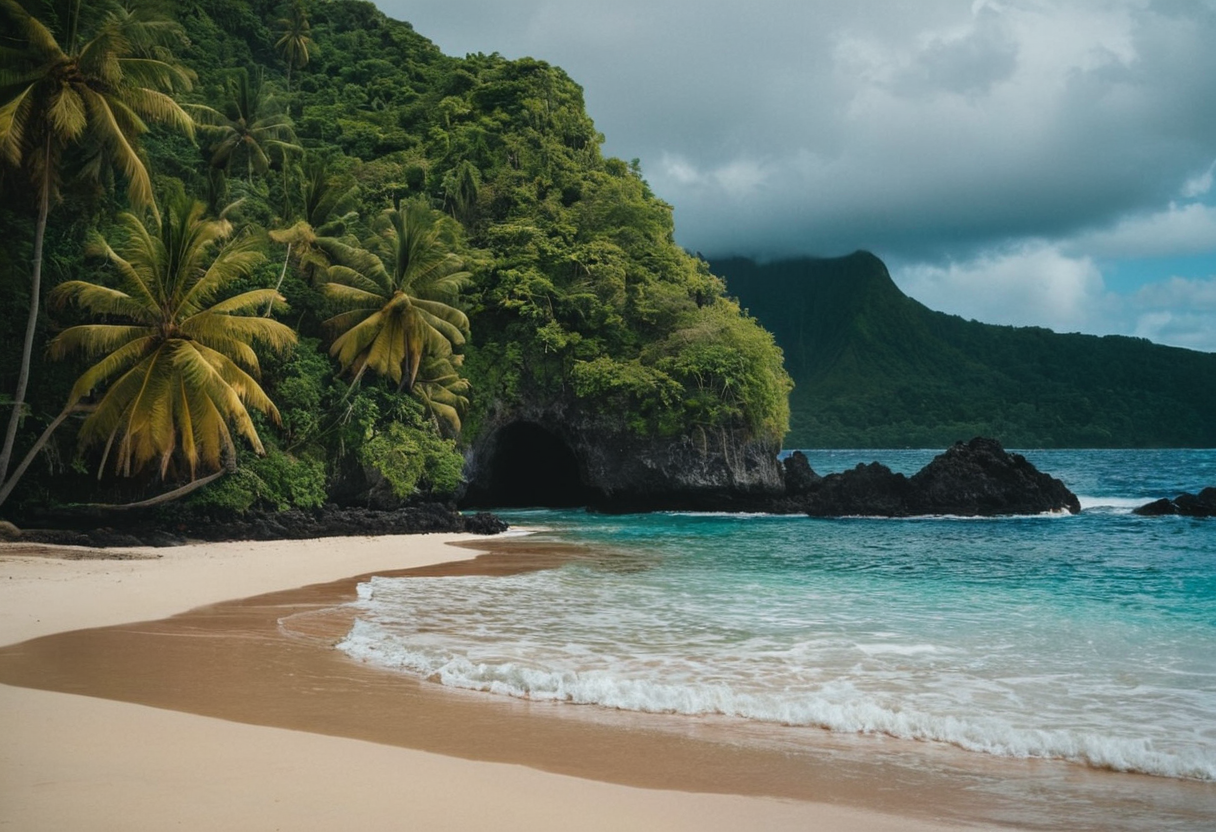
The vast expanse of the Pacific Ocean is dotted with islands, each a vibrant jewel in a turquoise setting. These islands, collectively known as Polynesia, are home to a rich cultural heritage, with language at its very heart. For anyone looking to learn Polynesian language, understanding the nuances and connections between these fascinating tongues is key. From the rhythmic sounds of Samoan to the melodious tones of Hawaiian, the Polynesian languages share a common ancestry yet possess distinct characteristics that make each one unique. In this comprehensive article, we'll embark on a linguistic journey, comparing Samoan, Tokelauan, Tongan, Tahitian, Rarotongan, and Hawaiian, highlighting their similarities, differences, and what makes them so captivating.
The Proto-Polynesian Roots: A Shared Linguistic Heritage
At the core of all Polynesian languages lies Proto-Polynesian, the reconstructed ancestor from which they all diverged. This common origin explains the significant lexical and grammatical similarities observed across the region. When you learn Polynesian language, you'll quickly notice recurring sound patterns, shared vocabulary for fundamental concepts like family, nature, and common actions, and similar grammatical structures. This shared lineage makes it somewhat easier for a speaker of one Polynesian language to pick up another, as they are often more like dialects of a single meta-language than entirely disparate tongues.
For instance, many basic words are cognates, meaning they share a common etymological origin. The word for "house" is often 'fale' (Samoan, Tokelauan, Tongan), 'fare' (Tahitian, Rarotongan), or 'hale' (Hawaiian), demonstrating a clear phonetic shift but an undeniable connection. Similarly, "man" is often 'tangata' (Samoan, Tokelauan, Rarotongan), 'tagata' (Tongan), 'ta'ata' (Tahitian), or 'kanaka' (Hawaiian). These consistent patterns are a testament to the ancient migrations and cultural exchanges that shaped the Polynesian world.
Samoan: The Pillar of Western Polynesia
Samoan, spoken primarily in Samoa and American Samoa, is one of the most widely spoken Polynesian languages. It is known for its relatively conservative phonology, retaining many sounds from Proto-Polynesian. Samoan has a clear distinction between long and short vowels, which can change the meaning of a word significantly. Its grammar is often considered a good starting point for those who want to learn Polynesian language due to its well-documented structure and extensive resources.
A distinctive feature of Samoan is its use of glottal stops and the velar nasal 'ng' (written as 'g'). For example, 'tagata' (person) clearly shows this 'g' sound. Samoan also has a rich oral tradition, with intricate rhetorical styles and poetic forms that are deeply embedded in its cultural practices. Understanding Samoan is a valuable gateway to understanding other Western Polynesian languages.
Tokelauan: A Close Relative with Unique Flavors
Tokelauan, the language of the Tokelau islands, shares a very close relationship with Samoan. The two languages are mutually intelligible to a significant degree, often considered dialects of each other. However, Tokelauan has its own distinct characteristics. It tends to be slightly more conservative than Samoan in some aspects, preserving certain older linguistic features. For example, where Samoan might have simplified certain consonant clusters, Tokelauan might retain them.
Tokelauan is a vital part of the cultural identity of the Tokelauan people, despite the small population of speakers. Its close ties to Samoan make it an interesting case study for understanding linguistic divergence within a relatively short geographical and temporal span. If you are learning Samoan, you'll find Tokelauan relatively easy to grasp, offering a unique perspective on linguistic evolution in Polynesia.
Tongan: The Distinctive Voice of Tonga
Tongan, spoken in the Kingdom of Tonga, stands somewhat apart from the other languages in this comparison, particularly those in Eastern Polynesia. While still undeniably Polynesian, Tongan has undergone some unique phonetic shifts and grammatical developments. For instance, Tongan often retains the Proto-Polynesian 's' sound, whereas many other Polynesian languages have shifted it to 'h' or dropped it entirely. Tongan also has a distinct stress pattern and intonation that sets it apart.
One of the most striking differences is in its vocabulary. While many core words are shared, Tongan often has unique terms or different pronunciations for certain concepts. For example, 'fale' (house) is common, but other words might differ significantly. Tongan culture places a strong emphasis on formal and informal registers of language, with specific vocabulary and grammatical structures used when addressing royalty or elders. This rich sociolinguistic aspect adds another layer of complexity and beauty to learning Tongan.
Tahitian: The Language of Paradise
Tahitian, or Reo Tahiti, is the dominant language of French Polynesia, particularly on the island of Tahiti. It is a quintessential Eastern Polynesian language, characterized by a smaller phonemic inventory compared to its Western counterparts. Tahitian notably lacks certain consonants found in Samoan or Tongan, such as 'k' and 'ng' (often replaced by a glottal stop or 'r'). This gives Tahitian a very soft, flowing, and vowel-rich sound, often described as melodic.
The influence of French is also evident in modern Tahitian, with many loanwords integrated into the language, particularly in technical and administrative domains. However, Tahitian maintains its strong indigenous character, with a rich oral tradition of songs, chants, and legends. For those who want to learn Polynesian language with a focus on ease of pronunciation, Tahitian can be an appealing choice due to its simpler consonant system.
Rarotongan: The Heart of the Cook Islands
Rarotongan, or Te Reo Māori Kūki 'Āirani, is the main language of the Cook Islands. It shares significant similarities with Tahitian and Hawaiian, reflecting its Eastern Polynesian lineage. Rarotongan retains the 'k' and 'ng' sounds, unlike Tahitian, but shares the vowel-rich and somewhat simpler consonant structure characteristic of Eastern Polynesian languages. It also uses the glottal stop extensively.
Like many Polynesian languages, Rarotongan has different dialects across the various islands of the Cook Islands, each with its own charm. The language is an integral part of the vibrant culture of the Cook Islands, used in music, dance, and storytelling. Efforts are continuously made to preserve and promote Rarotongan, ensuring its survival for future generations. Learning Rarotongan offers a fascinating insight into the linguistic diversity within Eastern Polynesia.
Hawaiian: The Rebirth of a Melodious Tongue
Hawaiian, or 'Ōlelo Hawai'i, is the indigenous language of Hawai'i. It is perhaps the most famous and, in some ways, the most distinct of the Polynesian languages within this group, largely due to its prolonged isolation and unique development. Hawaiian has the smallest phonemic inventory of all Polynesian languages, with only eight consonants (p, k, m, n, l, h, w, and the glottal stop) and five vowels, each with long and short forms.
This limited sound system gives Hawaiian its characteristic soft, flowing, and highly melodic quality. Words like 'aloha' (love, hello, goodbye) and 'mahalo' (thank you) are well-known globally, showcasing its beautiful sounds. Hawaiian experienced a severe decline in the 20th century but has seen a remarkable revitalization effort, with immersion schools and community programs bringing the language back to life. For anyone aspiring to learn Polynesian language, Hawaiian offers a unique journey into linguistic resilience and cultural revival.
Similarities and Differences: A Quick Overview
While each of these languages has its unique charm, several overarching patterns emerge:
- Phonology: Western Polynesian languages (Samoan, Tokelauan, Tongan) tend to have more consonants and retain sounds like 'g' (velar nasal). Eastern Polynesian languages (Tahitian, Rarotongan, Hawaiian) often have fewer consonants, with some losing 'k' or 'ng' and making extensive use of the glottal stop. Hawaiian is the most extreme in its phonological reduction.
- Vocabulary: Many core words are cognates, but phonetic shifts and unique developments mean that while 'fale/fare/hale' is consistent, other words can differ significantly. Tongan often stands out with more unique vocabulary.
- Grammar: All share a basic Verb-Subject-Object (VSO) or Verb-Object-Subject (VOS) word order, and similar systems for tense, aspect, and mood. However, the exact particles and markers used can vary.
- Mutual Intelligibility: Samoan and Tokelauan are highly mutually intelligible. Rarotongan, Tahitian, and Hawaiian also share a good degree of intelligibility, especially in basic conversation, but Tongan often requires more effort for speakers of other Polynesian languages.
For those interested in diving deeper, resources like Beauty of polynesian languages
Conclusion: The Enduring Legacy of Polynesian Tongues
The Polynesian languages are a testament to human ingenuity, cultural resilience, and the power of communication. From the bustling villages of Samoa to the serene beaches of Hawai'i, these languages connect people to their ancestors, their land, and their unique identities. Whether you choose to learn Samoan, Tokelauan, Tongan, Tahitian, Rarotongan, or Hawaiian, you are not just acquiring a new skill; you are unlocking a door to a vibrant cultural universe.
Each language offers a distinct lens through which to view the world, reflecting the history, environment, and values of its speakers. For anyone eager to learn Polynesian language, the journey is one of discovery, challenge, and immense reward. The tapestry of Polynesian languages is rich and diverse, woven with threads of common ancestry and unique innovation, promising a fascinating adventure for any linguistic explorer.
#PolynesianLanguages #LearnPolynesian #Samoan #Tokelauan #Tongan #Tahitian #Rarotongan #HawaiianLanguage

Kommentarer
Skicka en kommentar